

Commercial EV charging infrastructure
Commercial EV Charging Infrastructure For UK Businesses
3Phase helps businesses, landlords and commercial property owners assess, fund and install EV charging infrastructure for workplaces, fleets, customers and public charging locations.
EV charging at a glance
Turn parking spaces into useful energy infrastructure.
Commercial EV charging can support staff, fleets, visitors and customers. For suitable commercial property, it can also create a managed public charging opportunity with a funded or revenue-share model.
Workplace Charging
Support staff, visitors and business users with planned workplace EV charging points.
Fleet Charging
Plan charger capacity around vehicle dwell time, route patterns and future fleet electrification.
Public Charging
Assess whether visitor parking, retail locations or destination sites can support public EV charging.
Revenue Share Opportunities
Explore funded EV charging infrastructure where site usage and commercial terms are suitable.
Common EV charging concerns
Good EV charging projects answer the commercial questions early.
3Phase looks beyond the charger hardware. We help businesses understand grid capacity, funding routes, installation impact, future expansion and whether public charging has a realistic commercial case.
Grid Capacity
Review current demand, available capacity, load management and whether upgrades may be needed.
Upfront Cost
Compare capital purchase, asset finance, funded infrastructure and revenue-share routes.
Installation Disruption
Plan works around access, parking flow, trading hours, landlord permissions and site operations.
Future Expansion
Design with spare capacity, ducting, charger locations and long-term fleet demand in mind.
Revenue Potential
Assess usage potential, dwell time, public access and whether funded charging is commercially viable.
Funded EV charging infrastructure
Explore funded EV charging without assuming every site will qualify.
For suitable commercial locations, EV charging infrastructure may be funded and installed with revenue generated from charger usage shared between the site owner and infrastructure provider.
Eligible sites may be able to access a revenue-share model where the site owner receives up to 50 percent of net charging profit, subject to assessment, usage potential and agreement terms.
This route is usually most relevant where a site has strong parking availability, public access, meaningful dwell time and a realistic charging demand from visitors, customers, staff or fleet users.
Site suitability
Is your site suitable for funded EV charging?
Not every site is right for a funded or revenue-share model. These are the practical signals we review before recommending a route.
- Public access
- Strong parking availability
- Visitor or customer dwell time
- Fleet or workplace charging demand
- Good site visibility
- Sufficient electrical capacity or upgrade potential
- Long-term site control
- Suitable landlord or owner permissions
Charging infrastructure options
Commercial EV charging planned around how the site is used.
Workplace Charging
Charging for staff, visitors and business users with access control, billing and monitoring options.
Fleet Charging
Depot and workplace charging for vehicles that need reliable charging windows and practical energy planning.
Public Charging
Commercial EV charging for sites where customer, visitor or destination demand may support public use.
Revenue-Share Charging
Funded infrastructure opportunities for suitable sites, subject to demand, commercial terms and assessment.
Funding options
Compare the commercial EV charging funding routes.
The right route depends on cash flow, site control, expected usage, ownership preference and whether the chargers are primarily for your business or public users.
Ownership control
The business buys the chargers and controls the asset.
Staged payments
Costs are spread over an agreed finance structure.
Lower upfront pressure
Infrastructure may be funded where the site meets suitability criteria.
Shared commercial return
Charging income is shared under agreed terms where usage supports the model.
Best for
Businesses wanting direct ownership and capital control.
Best for
Finance directors looking to protect working capital.
Best for
Commercial sites with strong charging demand and public access.
Best for
Landlords and property owners with suitable parking locations.
Wider energy planning
EV charging can work harder when it is planned with solar and battery storage.
Commercial EV charging adds new electrical demand to a site. Where the long-term plan includes commercial solar, battery storage or Solar PPA funding, the charging design should be reviewed as part of the wider energy infrastructure plan.
Solar can help reduce imported electricity during generation hours. Battery storage may support resilience, demand management and more flexible use of site power. The right mix depends on load profile, grid capacity, charger speed and the way vehicles use the site.
Suitable commercial sites
EV charging for commercial property, workplaces and destination sites.
Hotels
Support overnight charging for guests, visitors and destination users.
Retail Parks
Use customer dwell time to support public charging demand.
Business Parks
Plan workplace charging across shared commercial parking areas.
Leisure Facilities
Match charging with predictable visitor stay times.
Tourist Attractions
Provide charging for longer visits and destination travel.
Industrial Estates
Assess fleet, staff and shared site charging requirements.
Commercial Property
Add EV charging infrastructure to strengthen site amenities.
Workplaces
Support employees, visitors and company vehicle charging.
Fleet Depots
Plan charging around vehicle use, operating hours and grid capacity.
Commercial charging environments
Designed for scale, access and long-term use.
Commercial EV charging needs to look professional, be easy to use and be planned around parking flow, customer dwell time, electrical capacity and future expansion.
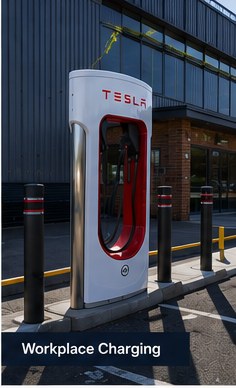
Workplace charging
Support staff, visitors and business users with neatly planned charger locations.
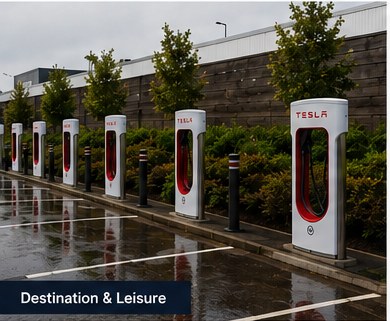
Destination and leisure
Use longer visitor dwell times to make charging more convenient for customers.
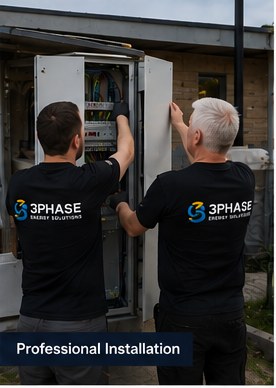
Professional installation
Plan electrical works, access and disruption before chargers are installed.
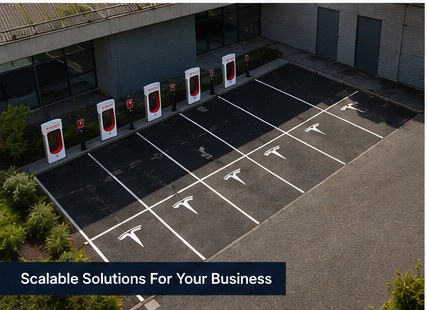
Scalable parking layouts
Design charger positions around current demand and future site expansion.
Delivery process
How we deliver your EV charging project.
Site Assessment
Review parking, access, usage patterns and practical installation constraints.
Usage And Revenue Review
Assess likely charging demand and whether public or funded routes may be suitable.
Grid Capacity Review
Check electrical capacity, load management options and upgrade requirements.
Funding Model
Compare capital purchase, finance, funded charging and revenue-share routes.
Installation
Plan works around access, safety, disruption and operational continuity.
Monitoring And Support
Review charger performance, usage data and future expansion requirements.
Why work with 3Phase
Commercial energy thinking, not generic charger installation.
Commercial Energy Focus
EV charging is assessed as part of the wider energy and operational picture.
Funding Model Expertise
We help compare ownership, finance, funded charging and revenue-share options.
UK Wide Delivery
Support for single-site and multi-site commercial EV charging projects.
Solar And Battery Integration
Charging can be reviewed alongside solar generation and battery storage.
Tesla Charging Infrastructure
Plan commercial EV charging infrastructure for suitable workplace and destination sites.
Commercial EV charging FAQs
Questions finance, property and operations teams ask before installing chargers.
How much does commercial EV charging cost?
Cost depends on charger type, number of bays, groundworks, electrical capacity, load management, payment systems and whether grid upgrades are needed. A proper assessment is needed before reliable pricing can be given.
Can EV chargers be installed with no upfront cost?
Some suitable commercial sites may qualify for funded EV charging infrastructure. Approval depends on site location, usage potential, public access, parking availability, electrical capacity and agreement terms.
How does EV charging revenue share work?
A funded infrastructure partner may install and operate chargers, with net charging profit shared with the site owner under agreed terms. This is subject to assessment and does not guarantee income or approval.
Can businesses earn income from public EV charging?
Some commercial sites can generate charging revenue where public demand, dwell time and site access are strong. The business case must be assessed carefully before any commercial route is recommended.
What types of sites are suitable for funded EV charging?
Hotels, retail parks, leisure sites, tourist destinations, workplaces, commercial property and fleet depots may be suitable where parking, access, dwell time and demand support the business case.
Can EV charging be combined with solar panels?
Yes. Commercial solar can help reduce imported electricity where generation and charging demand overlap. The benefit depends on load profile, charging times, roof space and system design.
Can battery storage support EV charging?
Battery storage may help manage peak demand, improve flexibility and support a wider commercial energy strategy. Suitability depends on charger speed, usage patterns and site electrical constraints.
Do you install commercial EV charging infrastructure?
3Phase supports commercial EV charging infrastructure planning for suitable workplace, fleet, visitor and destination charging projects.
How long does installation take?
Timescales depend on site surveys, electrical design, permissions, groundworks, equipment lead times and any grid upgrade requirements. Straightforward workplace projects are usually quicker than public charging hubs.
Will the site need an electrical upgrade?
Some sites need an upgrade, while others can use load management or phased installation. The answer depends on current site demand, available capacity and the charging speeds required.
Who manages charger maintenance and monitoring?
This depends on the ownership and funding route. Maintenance, monitoring, payment systems and support should be agreed before installation so responsibilities are clear.
Can EV charging support fleet electrification?
Yes. Fleet charging should be planned around route schedules, vehicle dwell time, charger speed, overnight charging opportunities, site capacity and future vehicle numbers.
EV Charging Opportunity Assessment
Review the commercial opportunity before choosing chargers.
Commercial EV charging should be assessed around site use, parking, dwell time, electrical capacity and whether charging is for staff, fleet, visitors or public users.
Ready To Reduce Your Energy Costs?
Commercial solar, battery storage and EV charging solutions for businesses across the UK.